From one bay to a 600-person turnaround.
Stations and routing in the shop. Crews, gang sheets and manpower in the field. Time captured at a kiosk, records born where the work happens. One execution layer, any scale.
Forge Command runs an industrial contractor end to end. AI takeoff to priced bid, shop floor with heat and weld traceability, crews and safety in the field, progress claims and holdback at the end. One job record carries the work from the tender package to the turnover data book.
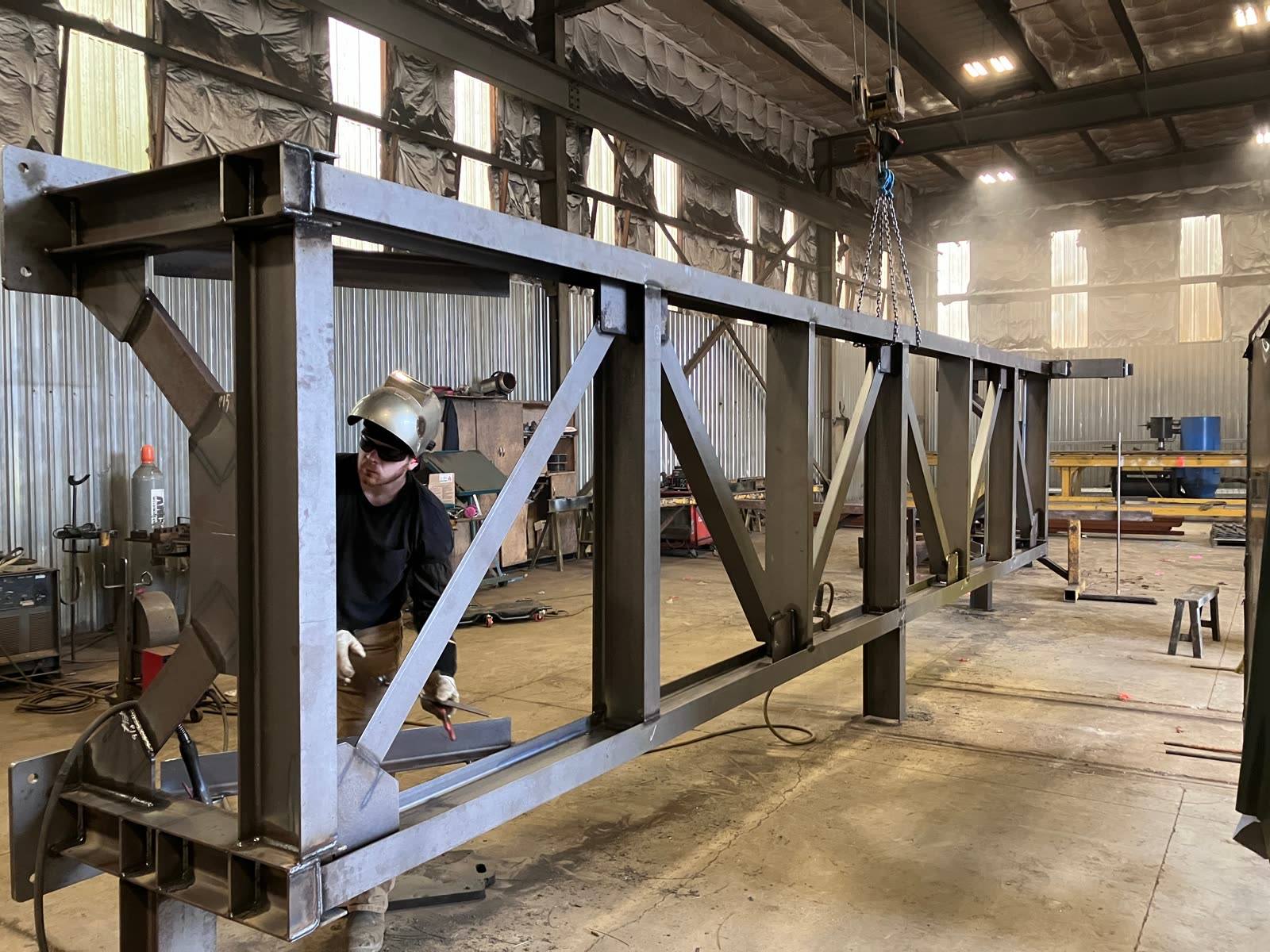
Built inside a working multi-trade contractor in Sarnia's Chemical Valley, and run there every day — shop and field, from a 20-person crew to turnaround scale.
Everything writes to one job record. The takeoff becomes the estimate, the estimate becomes the production package, shop scans become weld records, field hours become a certified claim, and the data book files itself as the work happens. Nothing is copied twice, so nothing disagrees.
5 DISCONNECTED TOOLS → 1 JOB RECORDEach module stands on its own and earns its keep on day one. They all write to the same job record, so every module you add makes the last one worth more. Turning the next one on is a switch, not an integration project.
AI reads the ISO package or the steel list. Every weight is re-derived from the shape designation and checked against the AISC database before you price it with your own blended crew rates.
Route every piece cut to loaded truck. Barcode kiosks at each station, nesting with heat-and-rack pull lists, and a finish forecast computed from your shop's actual trailing throughput.
Phone-first time entry, crew gang sheets, daily reports and T&M tickets your client signs on the spot. A six-week manpower outlook so next month isn't a surprise.
Weld maps, welder continuity tracked per process, NDE coverage with progressive sampling, ITPs with hold points. The data book scores itself and blocks the export until it's real.
Toolbox talks where the signature is the site sign-in. A JSA bank proven on live industrial sites, equipment and site inspections, observations with response deadlines, and a training matrix that flags expiries before the client does.
A controlled drawing register from IFR to as-built, transmittals with return tracking, RFIs that convert to change orders, submittals with real dispositions, and the punch list.
Progress claims off the schedule of values, consultant certification, holdback tracked to Construction Act timelines, AP/AR aging, earned-value cost control and division P&L.
A no-login onboarding wizard — TD1s, contract e-sign, banking captured masked — plus certifications and HR documents on one expiry clock per person.
The IFC model in the browser, Navisworks and Revit files translated in, a 4D timeline scrubbed against the schedule, and marks coloured by live shop status — BIM to fab to field.
One deployment, your switchboard. Modules a company doesn't need are simply off — they vanish from the nav. Start with the one that hurts most; light up the rest when you're ready. No migration, no integration project, no per-module invoice.
Forge runs differently depending on what you build. Pick the page that sounds like your shop and see exactly what it does for your kind of work.
Marks, sequences and tonnes. Takeoff verified against the AISC database, DSTV and KISS imports, nesting with heat-and-rack pull lists, barcode stations, CWB data books.
Forge for steelISOs, spools and dia-inch. Weld maps born at the station, welder continuity per process, B31.3 progressive NDE sampling, and an MDR that assembles itself.
Forge for pipingBig crews, short windows. The toolbox talk is the sign-in, gang sheets move hours in batches, and the six-week outlook shows the manpower cliff before you're on it.
Forge for turnaroundsFor whoever signs the cheques. SOV claims and certification, Construction Act holdback day-counts, earned-value cost control, division P&L and subs through T5018.
Forge for controlsThis is the same thread your steel follows. Every step below writes to the job record, and every record shows up again downstream, already attached.
Drop the tender package in. Documents classify and file themselves, the scope gets broken into work sections, and the contract review runs your clause playbook against the actual wording — every risk cited with a verbatim quote from the page it came from.
CONTRACT CRUNCH · 9 CLAUSE FAMILIES · QUOTES VERIFIED VERBATIMThe takeoff agent reads isometrics and steel lists, marks its evidence boxes on the drawing, and refuses to guess at a garbled size. Steel weights are re-derived from the designation against the official AISC shape database, so a wrong number gets caught before it prices.
636 PC / 17,910 LB · EVIDENCE ON PAGE · W12X26 → 26 LB/FT VERIFIEDBlended crew rates with your journeyman-to-apprentice mix, foreman uplift, consumables and equipment. Untouched default markups get a speed bump, and any bid over $250,000 needs a second set of eyes recorded before it goes out the door.
QUOTE Q-26152 · SUBMITTED · DUAL REVIEW ON FILEThe takeoff becomes the job BOM. Nesting commits bars against real inventory by heat and rack, travelers and barcode labels print, and the shop loader tells you which week the work actually fits — and where the bottleneck is.
NEST N-42 · LEAST-SCRAP · PULL: RACK C · LOT 8Y2241Station kiosks scan pieces through cut, fit, weld, paint and ship. Every weld logs its welder and WPS as it happens. Spotty shop wifi doesn't matter — scans queue offline and sync when the signal comes back.
STN WELD-2 · MARK B-214 SCANNED · OFFLINE QUEUE: SYNCEDNDE coverage runs to plan, with progressive sampling when a shot fails. Welder continuity is computed from the production log itself, per process. A load with an open reject doesn't ship — the gate holds it until disposition.
SHIP GATE · LOAD 12 · HELD: OPEN NDE REJECTCrews sign the morning talk and they're clocked in — one step, not two. Extra work gets a T&M ticket the client signs at the truck, photos and weather attached. The six-week outlook shows who you'll need, where, before it's urgent.
TBT 07:00 · 18 SIGNED · ATTENDANCE AUTO-STAMPEDProgress claims come off the schedule of values with holdback retained the way the Construction Act says. Day 60 gets counted for you. Approved sub invoices land in AP net of holdback, T5018-ready, and approved time pushes straight to QuickBooks.
CLAIM 07 CERTIFIED · HOLDBACK RELEASE: DAY 61 · ELIGIBLEStations and routing in the shop. Crews, gang sheets and manpower in the field. Time captured at a kiosk, records born where the work happens. One execution layer, any scale.
Records are born structured from shop-floor activity, not scraped into a binder afterward. A weld logged at the station, a heat received on the rack, a hold point signed off — each lands as a structured record on the job. By the time the last weld passes, the turnover package already exists.
The rigour that builds the book is the rigour protecting your data: your own isolated database, exportable any time.
Other platforms ship AI that drafts text and hopes. Forge agents work the way your QC does: show the evidence, or it doesn't count. The takeoff agent marks its boxes on the drawing. The contract agent quotes the clause verbatim, and if the quote isn't actually on the page, the finding is thrown out — by code, not by policy.
Every output lands as a draft on the job record with its sources attached, and a person signs off before it becomes real. The more modules you run, the more the agents can read, and the more they do.
Prequalify, tender, award, track and pay — every sub on the same job record as your own crews, from first quote to final holdback release.
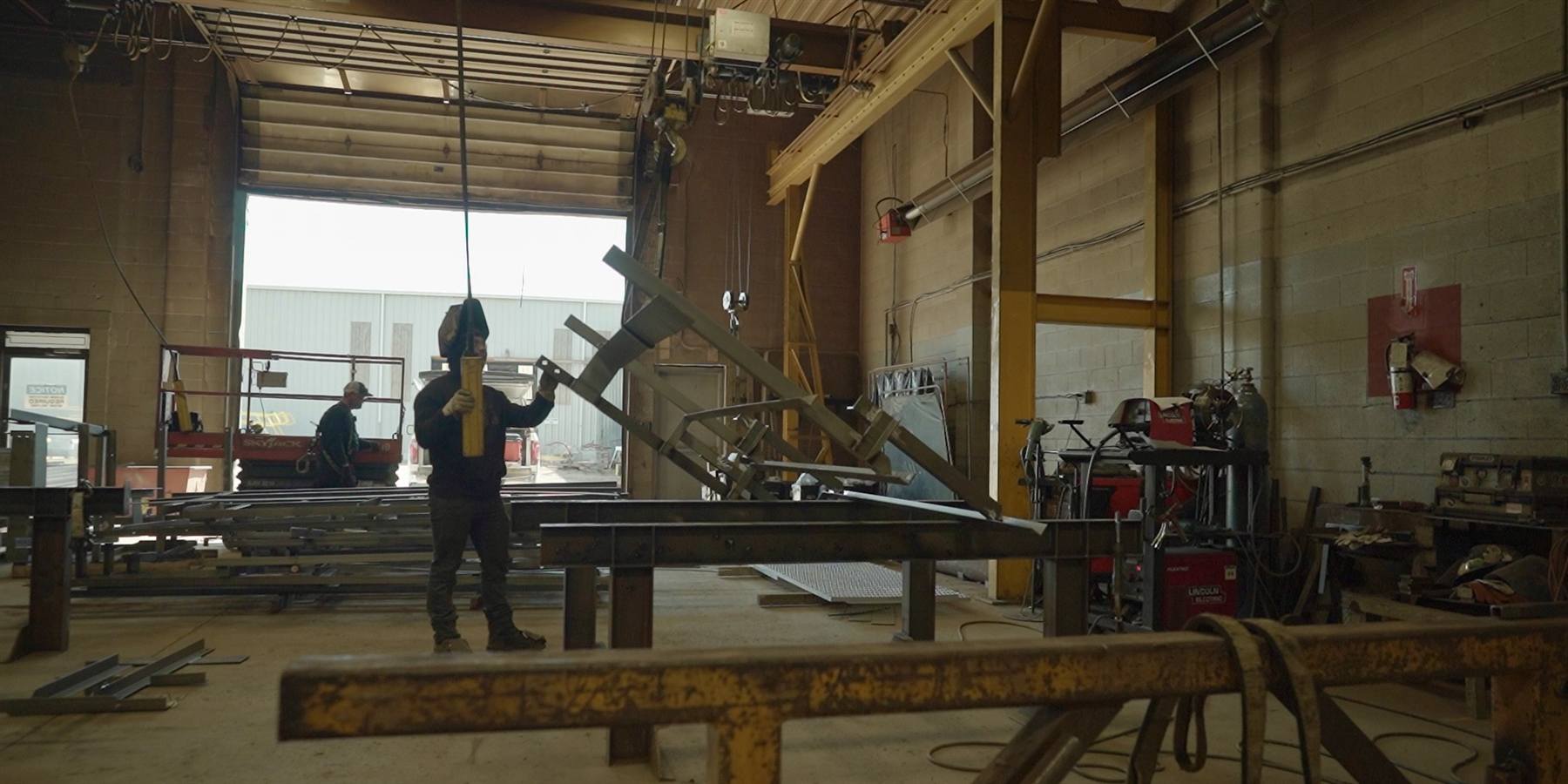
We ran our contracting business on five apps that didn't talk to each other. Estimating in a spreadsheet, drawings in email, quality in a binder, time on paper, and every handoff between them was somebody's Tuesday night.
So we built the system we couldn't buy — inside the shop, tested on our own bids, our own welds, our own audits and our own payroll. Forge isn't a software company's idea of how a contractor works. It's a contractor's system, opened up.
When you request access, you'll talk to a contractor, not a sales rep. If Forge isn't a fit for how you work, we'll tell you that too.
AI takeoff does the first pass; you verify lines instead of counting them.
Not a two-week binder hunt at turnover. It was assembling itself the whole job.
Estimating sheet, weld binder, safety binder, drawing email chain, time clock. Gone.
Generic project tools manage the job from the GC's chair. Forge runs the company that builds it. The shop floor, the weld record, the turnover book and the books — every shipped piece traceable by heat and weld back to the drawing. That's the part the GC's tools can't follow.
One price for your company's own instance. Not per user, not a cut of project volume. Hiring a crew or winning bigger work doesn't ratchet your bill. Ask and you'll get a straight number.
Every company runs on its own isolated instance and its own database — physically walled off from every other company. Not rows in someone's shared table.
Full export of your data, any time, in usable formats. If Forge ever stops earning its keep, you leave with everything.
Run one bid, one job or one crew through Forge and watch it work on your real drawings. We're onboarding a handful of contractors, deliberately.
You'll talk to a contractor, not a sales rep. Built by contractors, for contractors.
Enter your email — a personal email is fine — and we'll take you to your workspace.
A short note — you'll hear back from a contractor, not a sales queue.